
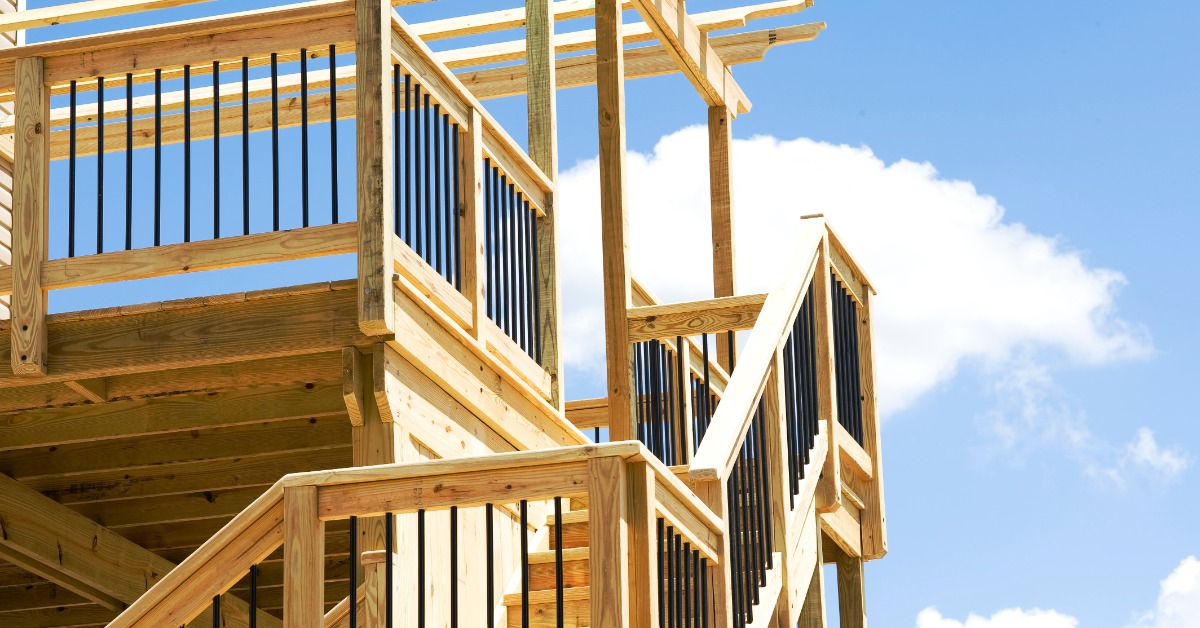
A porch or deck railing relies on carefully fitted connections to bring its individual wood components into a cohesive system. The role of wood joinery in porch and deck railings becomes particularly noticeable where rails meet supporting elements, since precise connections influence alignment and the finished appearance. Exterior conditions add another consideration because wood naturally responds to changes in its environment. Thoughtful joinery accounts for these factors while allowing the railing to complement the surrounding architecture.
Joinery Brings Railing Components Together
When builders plan how adjoining railing components will connect before making their cuts, they can account for the dimensions of each piece and establish cleaner transitions throughout the system. Accurate joinery allows rails to meet posts with fewer visible gaps while giving installers clear reference points as they assemble each section. The connection method should suit the specific components involved so the finished assembly reflects the intended railing design.
Precise Connections Keep the Layout Consistent
Repeated elements make small discrepancies increasingly visible across a porch or deck railing, especially when one connection shifts the position of the next component. Builders who measure each joint carefully can maintain consistent spacing throughout longer railing sections while keeping rails aligned with their supporting posts. That precision creates continuity across the system without relying on decorative elements to conceal poorly fitted connections.
Exterior Conditions Change How Wood Behaves
Outdoor railings encounter moisture and temperature changes that cause wood to expand or contract, making material movement an important consideration when builders plan joinery. Connections need enough precision to fit properly without ignoring the natural characteristics of the wood used for the project. Accounting for those conditions during construction can reduce unnecessary stress where components meet while preserving the intended alignment of the railing.
Scale Influences Connection Planning
Large architectural elements establish proportions that affect how nearby railing components look and connect. When a porch incorporates substantial wood porch columns, builders need to consider how the dimensions of adjoining rails relate to those larger vertical elements, so the transitions feel intentional. Coordinating the connection with the scale of the surrounding woodwork allows the railing to complement the architecture without making individual joints a visual focal point.
Well-Planned Joinery Supports the Complete Design
When builders consider the role of wood joinery in porch and deck railings, the value becomes clear in how individual connections support a cohesive finished design. Precise joinery keeps adjoining components aligned while allowing the craftsmanship of the railing to complement the porch or deck.
For projects that require specific profiles or replacement pieces, Mr. Spindle offers wood railing components and custom replication services for projects of any size. Contact Mr. Spindle to discuss components that suit your railing design and architectural style.